"The South Side has been going up since 2006," Robert Brown, a lifelong South Shore resident and former Realtor, told WBEZ this summer. He wasn't wrong, and he wasn't trying to be dismissive of what's happening now. He was making a point that matters if you're looking at property near Jackson Park: the appreciation story predates the building everyone's talking about. What doesn't predate it is a piece of city law that now governs how certain sales in the area actually have to happen.
The Obama Presidential Center opened to the public on Juneteenth, June 19, 2026, after construction costs climbed from an initial estimate of $300 million to roughly $850 million. The 19.3-acre campus in Jackson Park anchors what real estate reporters, city officials, and longtime residents all describe, in different tones, as the fastest-moving stretch of the South Side in decades. If you're comparing Woodlawn or South Shore against other Chicago neighborhoods for an investment or a move, the price numbers you've probably already seen only tell half the story. The other half is a notification requirement that can add six months to a closing timeline, and it doesn't apply evenly to every kind of buyer.
The Number Everyone Is Repeating
In East Woodlawn, single-family and multifamily home prices doubled between 2019 and 2025, reaching a median of $440,000, according to DePaul University's Institute for Housing Studies as reported by the Illinois Answers Project. For the broader area covered by the city's anti-displacement pilot program, the numbers are even sharper: median rents have risen 43 percent and home values have climbed 130 percent since the project was first announced in 2015, based on figures from the mayor's office and South Shore Ald. Desmon Yancy's staff.
Put that $440,000 median next to a citywide figure. Chicago's median home sale price over the three months ending June 2026 was $430,000, up 7.4 percent year over year. A stretch of the South Side that spent generations priced well under the city average now sits at roughly the same median as Chicago as a whole. That's the headline, and it's the version of this story that gets repeated in most coverage.
Geoff Smith, the Institute for Housing Studies' executive director, offered the caveat that gets left out most often: "The Obama Center is a driver, but there's a lot going on there." The University of Chicago's expanding South Campus, pushing its footprint south of the Midway Plaisance into Woodlawn, is part of that "lot going on." So is two decades of prior appreciation that Brown was referencing. Treating the Obama Center as the sole cause of the price move overstates what any single project can do and understates how long this trend has actually been building.
What the Median Doesn't Show You
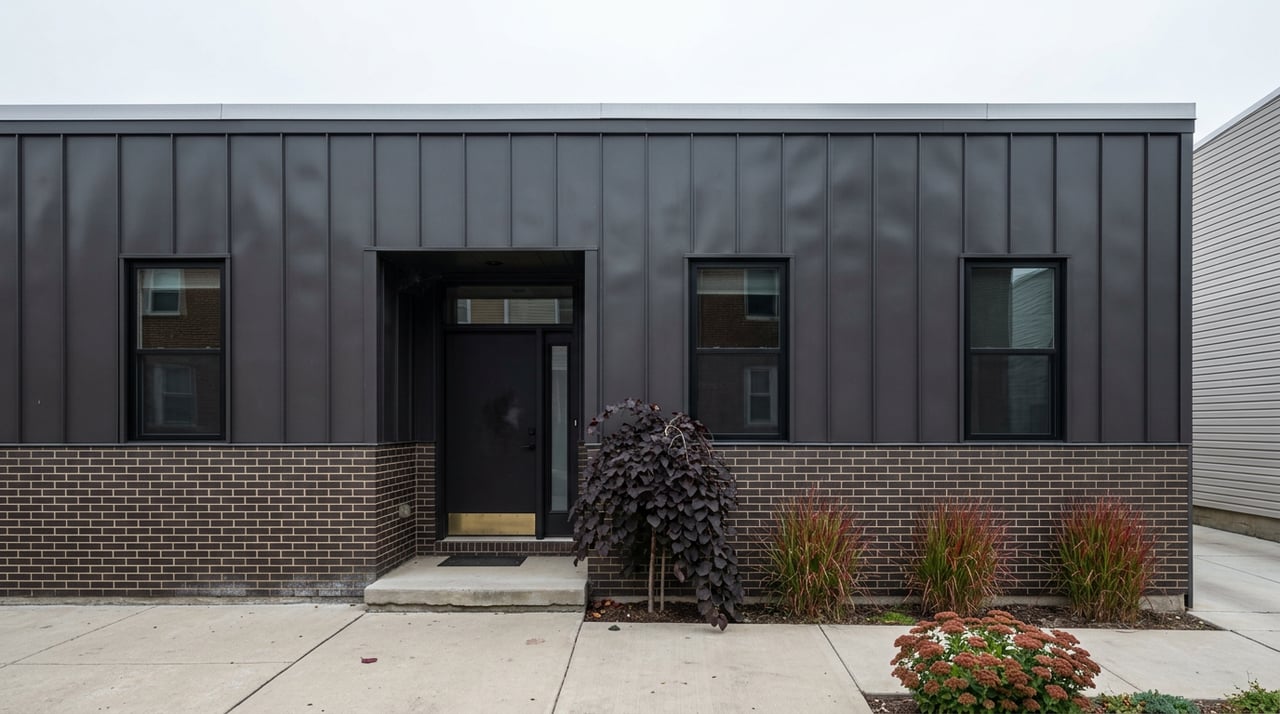
A median hides variation, and the variation here is the part an investor actually needs. Four new, nearly identical townhomes went up on South Ellis Avenue in East Woodlawn, each selling for close to $1 million, standing in visible contrast to the older brick multifamily buildings that surround them, according to reporting from the Illinois Answers Project. That's new construction pricing, not the resale market, and it's dragging the area median upward in a way that doesn't reflect what a buyer looking at an existing two-flat or courtyard building will actually pay.
Meanwhile, not everyone closest to the ground agrees the rental market has caught up to the hype. Bill Eager, senior vice president at the nonprofit developer Preservation of Affordable Housing, told WBEZ that while South Shore apartment building values have risen, "I've heard that some investors who went in the last few years are having buyer's remorse. I'm not sure that rents in the market have rewarded their speculation." That's a meaningful counterweight to the appreciation headlines, especially for anyone underwriting a multifamily purchase on the assumption that rents will keep climbing at the same pace as sale prices.
There's a real, lived version of this gap too. One Woodlawn renter told Block Club Chicago that her one-bedroom apartment used to cost $1,200 a month, and comparable units in the neighborhood now run closer to $1,800. That's a substantial increase for a tenant, and it still lags the 130 percent home-value jump cited for the same area. Rents are rising. Sale prices, at least for certain property types, are rising faster.
| Metric | Baseline | 2025-2026 | Change |
|---|---|---|---|
| East Woodlawn single/multifamily median sale price | 2019 | $440,000 (2025) | Roughly doubled |
| Pilot-area median rents | 2015 | 2026 | Up 43% |
| Pilot-area home values | 2015 | 2026 | Up 130% |
| Chicago citywide median sale price | No fixed baseline | $430,000 (3 months ending June 2026) | Up 7.4% year over year |
The Rule That Actually Changes a Transaction
Here's the part that doesn't show up in most of the price coverage, and it's the part that matters most if you're the one signing a purchase agreement. In April 2026, an ordinance called the Jackson Park Housing Pilot Program took effect across parts of Woodlawn and South Shore. It's modeled after a similar pilot the city passed on the Northwest Side, and it changes the mechanics of selling a building, not just the price you can ask for it.
Under the ordinance, if you're buying or selling a residential building with 10 or more units in the covered area, here's what has to happen:
- The landlord must notify tenants that the building is going up for sale.
- A 180-day waiting period begins from that notice.
- During those 180 days, tenants have the right to organize, form a group or association, make a competing offer on the building, and pursue acquisition financing.
- While the building is actively listed, the landlord must show "just cause" for any eviction, defined under the ordinance as a lease breach or illegal activity, not simply a desire to turn over the tenant base ahead of a sale.
Six months is a long time to hold a deal open, and it's a detail that changes how you'd structure financing, earnest money, and timeline expectations if you're the buyer on a 10-plus unit building anywhere in the pilot boundary. It's also why the visible signs of change in East Woodlawn right now are single-family lots and small new-construction townhomes rather than large apartment conversions. The threshold sits at 10 units. A four-unit building, a two-flat, or a single-family home doesn't trigger the notice-and-wait requirement at all.
That's the asymmetry worth sitting with. The price appreciation applies to the whole area, roughly speaking, whether you're eyeing a single-family home or a mid-size rental building. The legal friction does not. It applies only above that unit count, and only inside the pilot boundary that covers parts of Woodlawn and South Shore, not the entire South Side.
What This Means If You're Actually Comparing Properties
If you're a relocator or first-time buyer looking at a single-family home or a small multi-unit property near Jackson Park, the ordinance likely doesn't touch your transaction directly. What you're weighing is a straightforward appreciation story: a neighborhood with a median price that's climbed to roughly match the city as a whole, anchored by a major civic institution that just opened, with a caveat about how much of that trend is truly new versus two decades in the making.
If you're an investor looking at anything with 10 or more units inside the pilot area, the calculation is different. You're not just underwriting rent growth against Eager's buyer's-remorse warning. You're underwriting a closing timeline that could run six months longer than a comparable deal elsewhere in the city, plus the administrative work of tracking whether a tenant group organizes a competing offer during that window. Some investors will decide that risk is priced into the deal already. Others will decide it isn't, and look at property just outside the pilot boundary instead, where the appreciation story is similar but the notification requirement doesn't apply.
Either way, the mistake is treating "prices near the Obama Center are up" as the whole picture. The number is real. So is the ordinance. A buyer who only knows one of them is working with half the information the deal actually requires.
A Few Questions Worth Asking Before You Write an Offer
Does the 10-unit threshold count units in the building or across a portfolio? The ordinance as described applies at the building level, so confirm with a real estate attorney how a given property's unit count is calculated before assuming you're exempt.
Does the ordinance apply to the entire South Side, or just this specific pocket? It covers parts of Woodlawn and South Shore within the Jackson Park Housing Pilot boundary, not the neighborhoods as a whole. A property a few blocks outside that boundary may not be subject to the same notice-and-wait requirement.
Is the price growth specific to proximity to the Obama Center, or is it neighborhood-wide? Reporting so far points to a "halo effect" that's strongest closest to Jackson Park and fades with distance, alongside separate drivers like the University of Chicago's South Campus expansion. Comparable properties even a mile apart can be telling different stories.
If you're weighing a purchase in this part of the South Side, or comparing it against a suburb entirely, it helps to look at both the price trend and the paperwork before you get attached to a number. Nina Trivedi works with buyers, sellers, and investors across Chicago and the surrounding suburbs, and brings 25 years of accounting and financial background to exactly this kind of decision. Start the Conversation when you're ready to look at what a specific property, and a specific set of local rules, actually mean for your budget.