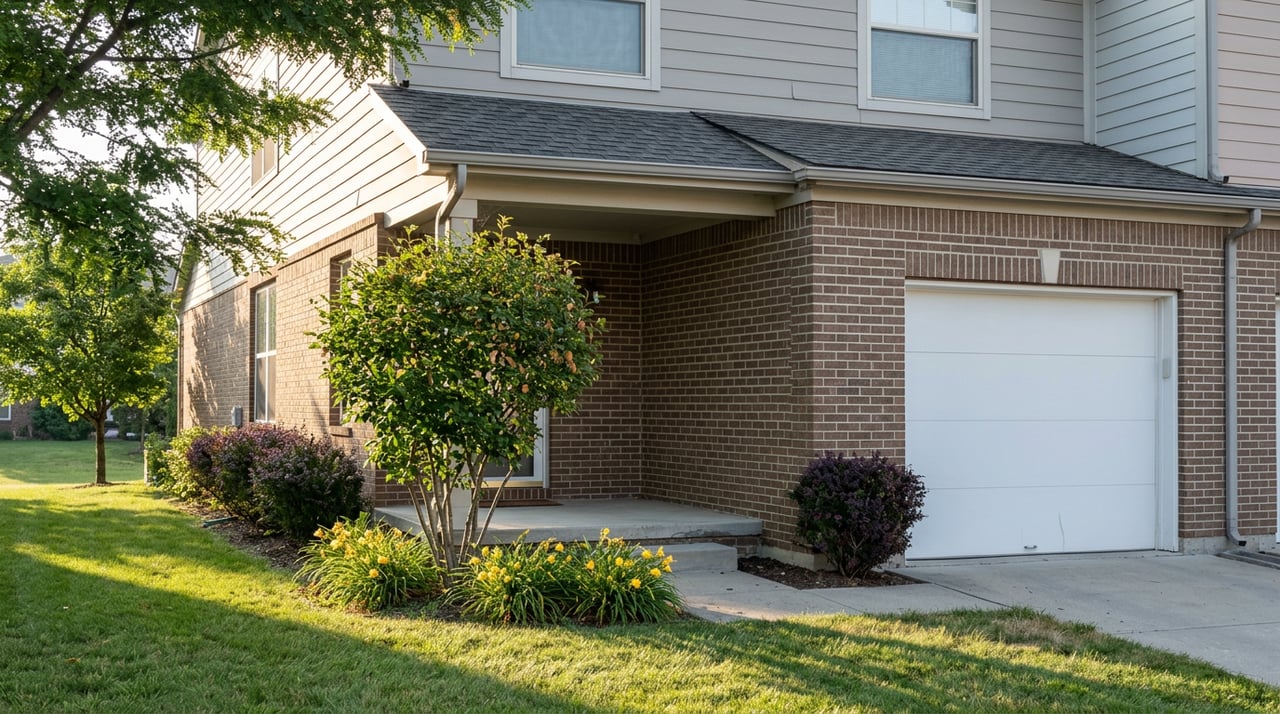
Two buyers walk into the same price range on the same week in Aurora. One is looking at a brick ranch near Fox Valley Mall. The other is looking at a similar-sized home four blocks over, closer to the Naperville border. Same style of house, same rough vintage, same list price. What almost never shows up in either listing description is which county, township, and stack of taxing bodies each parcel actually sits inside, and that detail will do more to shape their annual carrying cost than the few thousand dollars separating the two offers.
Aurora is unusual in a way that rarely makes it into a home search. It is not contained in one county. It spans four.
Aurora is not one tax jurisdiction. It's four.
Most Chicagoland suburbs sit tidily inside a single county line. Aurora doesn't. Founded in Kane County, the city's limits have since crossed into DuPage, Will, and Kendall counties, making it one of only three cities in Illinois that span four counties, the others being Barrington Hills and Centralia. That is not a historical footnote. It means two homes inside the same Aurora address range, sometimes on the same road, can be assessed by different township assessors, taxed by different school and park districts, and billed on paperwork that runs through a different county treasurer's office entirely.
Buyers tend to treat "Aurora" as one market with one going rate for taxes. It isn't. The county line is really a proxy for something more granular: a different stack of local taxing bodies layered on top of the same city.
The $1,224 a year hiding inside two ZIP codes
Here's where the gap becomes real money. Within Aurora's DuPage County footprint alone, homeowners in the 60502 ZIP code carry a median effective rate of 2.54%, while those in 60504 pay 2.50%, a spread that reflects how school district boundaries and local assessment districts are drawn across DuPage County. On paper, a 0.04 percentage point gap sounds trivial. In dollars, it isn't small at all: bills in Aurora can range from $6,613 in 60504 to $7,837 in 60502, primarily due to differences in school district levies and local assessment districts. That's a $1,224 annual difference between two ZIP codes inside the same city, tied to nothing about the house itself.
ZIP Code | General Area | Median Effective Rate | Typical Annual Bill |
|---|---|---|---|
60504 | Far East Aurora, near the Naperville border | 2.50% | $6,613 |
60502 | Far East Aurora, near the Naperville border | 2.54% | $7,837 |
Figures reflect Ownwell's Aurora, DuPage County tax data set, current as of 2026.
The instinct most buyers bring into a search is that a higher price should mean a higher tax bill, and a lower price should mean a lower one. That instinct breaks down the moment two homes of similar value sit on opposite sides of a school or assessment boundary that has nothing to do with square footage.
The obvious shortcut doesn't hold up either
There's a tempting heuristic here: just avoid the DuPage side of Aurora, since DuPage County has a reputation for higher property taxes than Kane County. The countywide numbers seem to back that up at first glance. DuPage County's median effective property tax rate is 2.16%, with a median annual tax bill of $7,578. Meanwhile Kane County's effective property tax rate runs approximately 2.5% of market value on average, though the specific rate depends on the property's location and taxing districts.
So DuPage looks cheaper county-wide. But inside Aurora specifically, the DuPage-side rate isn't 2.16%. It's 2.51%, based on actual property records in DuPage County, which sits above the DuPage countywide median and lands almost exactly where Kane County's average falls. The county-level averages that buyers use to shortcut their decision don't hold once you zoom into Aurora itself. Something about the stack of city, park district, library, and school levies inside Aurora's incorporated limits pushes rates above what the surrounding county alone would predict, regardless of which side of the river you're on.
That's the part worth sitting with. The county line matters less as a rule of thumb than as a signal that different, specific taxing bodies are attached to a given parcel, and the only way to know what those are is to check the parcel, not the county's reputation.
Even the payment calendar shifts when you cross from Chicago
Buyers relocating from Chicago proper carry another assumption into Aurora that doesn't transfer cleanly: the tax payment calendar. Cook County's 2025 tax year bills, payable in 2026, carried a first installment due around March 2-3 and a second installment due around August 3, both already behind us as of this writing. Aurora runs on an entirely different rhythm. Kane County's first installment for 2025 taxes was due June 1, 2026, and its second installment is due September 1, 2026, a date that's only a few weeks away. DuPage County runs on the same two dates. Someone still thinking in Cook County's March-and-August rhythm could easily misjudge when the next Aurora bill actually lands after closing.
Kane County has also made the bill itself easier to read this year. Bills reflecting a new design were mailed to all 199,000-plus Kane County property owners by May 1, 2026, adding a pie chart showing how tax dollars are allocated among school districts, municipalities, the county, and other taxing bodies. That redesign exists because, as the Treasurer's office put it, most residents historically saw a final number with no explanation of how it was built.
What "which side of Aurora" actually means
Aurora's own geography lines up with these tax boundaries more than most buyers realize. The city is generally described in three parts: the West Side, west of the Fox River, the East Side, spanning the region east of the Fox River to the DuPage County line, and the Far East Side, the portion of the city east of the DuPage County line. That means the river itself acts as one structural boundary, and the DuPage County line acts as a second one entirely. A buyer touring a West Side listing in the morning and a Far East Side listing in the afternoon isn't just seeing two different pockets of housing stock. They're crossing two separate boundaries that can each reset which taxing bodies apply to the home.
How to actually check before you write an offer
None of this requires a specialist. It requires asking for one piece of information that's already sitting in the listing file: the parcel's PIN, or Property Index Number. The PIN identifies which county and township hold the assessment, and from there, which specific taxing bodies apply.
A few practical steps:
- Ask your agent for the PIN on any Aurora property you're seriously considering, before you write an offer.
- Check the county prefix. In DuPage County, the first two digits of a parcel number identify the township, from 01 for Wayne through 10 for Downers Grove, and each township carries its own local levies.
- Look up the parcel directly with the relevant county treasurer or assessor. Kane County's property tax portal, DuPage County's tax information page, Will County's Treasurer's office, and Kendall County's property tax inquiry system all let you search by address or PIN for free.
- Remember that Illinois bills in arrears. Taxes assessed for the 2025 tax year are billed and paid in 2026, so the bill you see at closing often reflects the seller's exemptions and assessed value, not yours, until the next reassessment catches up.
A few questions worth asking before you compare two Aurora listings
Does the county affect my closing paperwork? Recording still happens at the county level, so a DuPage County parcel and a Kane County parcel will route through different recorder's offices. Your title company handles this, but it's worth confirming early which office is involved if you're comparing homes on opposite sides of a county line.
Will my tax bill change the year after I buy? Likely yes, since exemptions like the homestead exemption depend on living in the home by January 1 of the tax year, and the homeowner must live in the home on or before January 1st of the tax year to qualify. If you close mid-year, the first bill you receive may not yet reflect your own exemption status.
How do I find out which specific taxing bodies apply to an address? The PIN is the fastest route. Once you know the county, the county assessor's or treasurer's parcel lookup tool will show every taxing body layered onto that specific property, from the school district down to the park and library districts.
The sale price on an Aurora listing is a starting point, not the full picture. The parcel behind that price carries its own stack of county, township, and district lines, and that stack is what actually determines what you'll owe every June and September. Buyers who ask for the PIN before they write an offer are the ones who don't get surprised by the first bill.
If you're comparing Aurora listings and want a second set of eyes on what a specific parcel's tax picture actually looks like, Nina Trivedi brings 25+ years of accounting background to exactly this kind of question. Start the Conversation.